

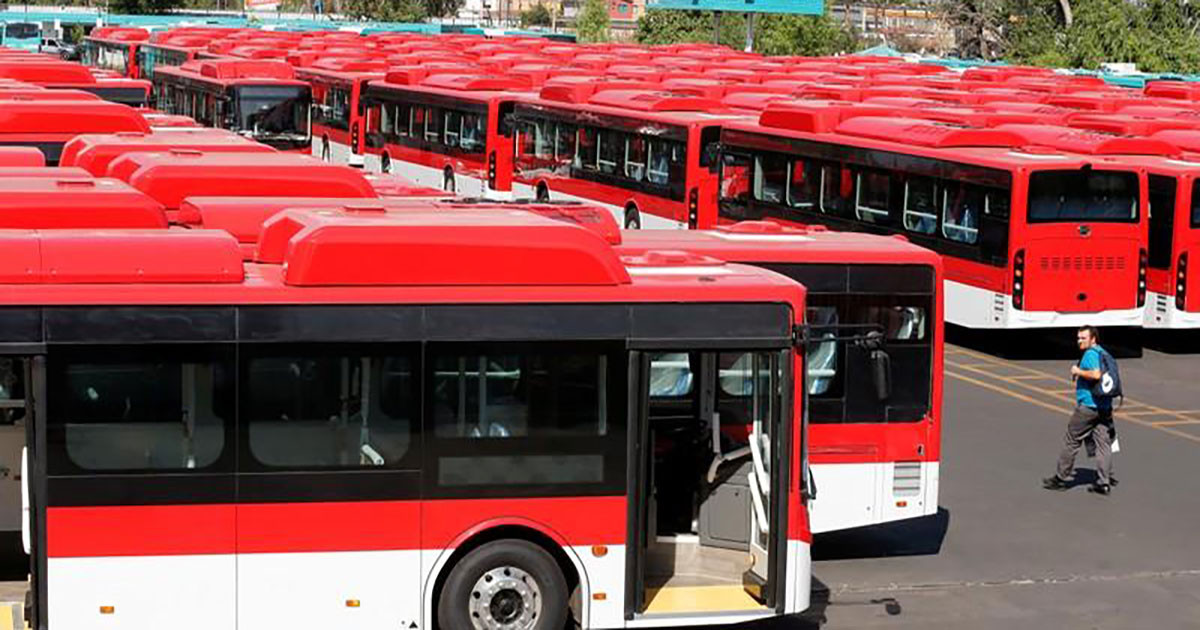
Country’s first environment-friendly e-bus (electric bus) service for school-goers is likely to hit Dhaka streets this December.
The Dhaka North City Corporation (DNCC) authorities are working to import the air-conditioned e-buses, which will operate in Gulshan, Banani, and Baridhara areas of the city, officials said.
Initially, the students of four English medium schools — Chittagong Grammar School-Dhaka, Scholastica School, Sir John Wilson School, and Bangladesh International Tutorial School — can avail the service during the pilot project.
According to the plan, all schools in Dhaka will gradually be brought under the project if it comes out as a success. Experts say school bus service is an effective way to reduce traffic jams.
The DNCC has already completed the preliminary works to implement the initiative. Now, a technical committee is conducting a study that will end in mid-October. The committee will finalize the specifications of the buses, and fix the fares and catchment areas.
“The city corporation is closely working with the Power Division for setting up the charging stations for the buses. The new e-buses will be air-conditioned and dedicatedly used as school bus service,” Md Selim Reza, chief executive officer of the DNCC, told .
To ensure security, he said, the authorities would use modern technology, including CCTV cameras and tracking systems.
The DNCC initiated the project to reduce carbon emissions to a large extent and help reduce pollution in Dhaka — one of the most polluted cities in the world.
Earlier, state-owned Bangladesh Road Transport Corporation (BRTC) introduced a special school bus service in January 2011 with 14 buses between Mirpur and Azimpur. But the service failed to sustain due to a lack of proper management.
The BRTC introduced the service mainly to reduce traffic jams while the DNCC is moving ahead with the same objective since the problem has become more severe than before.
Experts say many cities around the world have school bus service since it is safe and financially convenient.
“The BRTC failed to maintain the catchment area for picking up students while guardians prefer door-to-door service,” said Dr Md Hadiuzzaman, a transport expert.
“But the new initiative taken by the DNCC can be a success as it targets specific zones with specific students,” he told .


