

Special Correspondent
A sudden vaccine vacuum created through Serum supply embargo is being filled with Chinese and Russian jabs under an urgent Banglsdesh government decision, but the dependence on an oxygen duopoly could create a crunch, experts say.
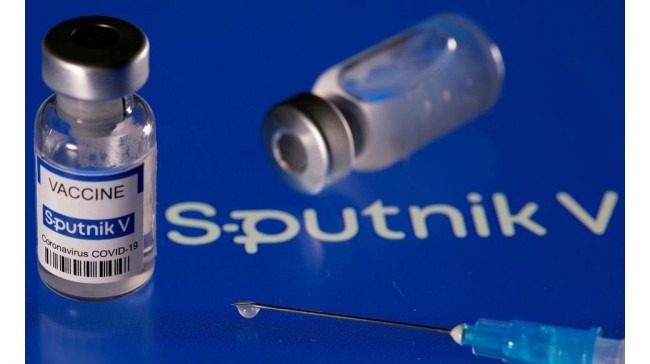
The Cabinet Committee on Economic Affairs Wednesday approved a proposal on producing Chinese and Russian vaccines – Sinopharm and Sputnik V–in Bangladesh pharmaceutical facilities and buy those to ensure the corona-preventive vaccination for all.
In an emergency follow-up action over Tuesday’s breakthroughs in the vaccine crisis following supply cut from the lone supplier in India amid a catastrophe in the neighboring country itself, the approval came from a meeting of the cabinet body, held virtually with Finance Minister AHM Mustafa Kamal in the chair.
There were flurries of criticisms from many medics and civil-society members about what they called ‘monopoly’ of a local firm in vaccine buy from a single source–the Serum Institute of India–which led to the crisis.
In their view it is only logical that the Indian government should bar vaccine supply while the country of 130-million-strong population is hit by what its apex court likened to ‘tsunami’. India counts over 3,000 deaths and over 300,000 cases daily for a week now–world’s highest everyday tallies now.
Senior ministers appeared to heave a sigh of relief having struck accords with the two countries of same bloc in geopolitics of the day on vaccines, as the country had to halt the first-round vaccination drive against the Covid-19 pandemic.
”Vaccine we need, come from any source,” said ruling Awami League general secretary and Road Transport Minister Obaidul Quader after the deal was sealed in principle.
Briefing reporters virtually after the meeting, Mustafa Kamal said that the approval for producing Chinese and Russian vaccines ”has been given and, at the same time, the government will pursue procuring vaccines from the country’s primary source – Serum Institute.”
After the meeting, Additional Secretary of the Cabinet Division Dr Sahida Akter said the cost of the vaccine production can be known after the proposal is placed before the purchase committee.
The meeting also approved another proposal for procuring RT-PCR test kits and PCR lab under the Direct Procurement Method (DPM) through the Central Medical Stores Depot (CMSD) under the Health Services Division.
The committee also approved a proposal for purchasing healthcare equipment and medical equipment under DPM through the CMSD under the Health Services Division.
Some senior medical experts also were upbeat over the vaccine diversification. ”I welcome the government decision. I’m so happy,” said Pharmacology department chief of BSMMU Prof Dr Saidur Rahman.
With higher cases and casualties amid the current second wave of the coronavirus in Bangladesh, hospitals are struggling to provide oxygen therapy to save life as the health department depends only on two companies–one multinational, Linde BD, and another local, Spectra–for medical-grade oxygen. Critics see as a ‘duopoly’.
”Oxygen is unlimited in the air–only you need to process it in plants,” said one analyst.
A representative of Linde told the media that they were trying to meet the demand, if needed, by import.
Oxygen import, too, used to be made from India. And itself has run out of the lifesaving gas. Western countries are dispatching mobile oxygen plants to help avert a ‘humanitarian crisis”.
Meanwhile, the Bangladesh government finally approved Tuesday emergency use of the Russian corona vaccine Sputnik V and also sought urgent supply of Chinese jabs following delivery disruption from India.
In another major development on the corona-combat front, Bangladesh joined a multi-pronged China-led coalition meant for combat against the Covid-19 pandemic, poverty alleviation and post-pandemic economic recovery.
“We have given approval for emergency use of Sputnik V vaccine in the country… we are expecting that the vaccine (Sputnik V) may arrive in Bangladesh in May this year,” Major- General Mahbubur Rahman, Director-General at the Directorate General of Drug Administration (DGDA), told the media.
Foreign Minister AK Abdul Momen and Health Minister Zahid Maleque also briefed the press about the Sinopharm and Sputnik vaccines, both airing despair over the booked vaccine supply from the Serum Institute of India.
They hoped for 40 lakh doses of Sputnik vaccine in two weeks and China vaccines ”as soon as possible”.
The fast developments take place while a high-profile delegation led by China’s defense minister is on a Dhaka mission.
Hopes flicker for supply of vaccines from China, America’s Pfizer and Russia early May under an all-out hunt for the preventive against the life-sapping coronavirus pandemic.
Procuring vaccine is a must–‘beg, borrow or steal”–as the only alternative left is a painful herd immunity through mass transmission of the virus which has developed some virulent variants, analysts say as the vaccination drive that now generated hopes over fears ran aground following the lone supply-chain cutoff.
Health officials earlier held hope against hope for a shipment of 2.0 million doses to come from the Serum Institute of India or SII, some 600,000 doses as gift from China and 100,000 from America’s medical multinational Pfizer early next month.
Health Minister Zahid Maleque, however, looked resigned to fate while talking to the media. ”When supply from Serum Institute will come cannot be said for sure,” he said.
The health minister, who recently despaired about accommodating patients even if entire Dhaka were converted to hospital amid the raging second wave of the pandemic in Bangladesh, said manufacturing the Russian vaccine Sputnik V in local facilities is under negotiation.
Fears of spread of highly infectious variants of the virus from India gripped even many medics over here as the two countries share close links of geography, demography, physiology, behavioural patterns and so.
In Bangladesh, the second wave of the scourge hovers over new peaks by local standard, with deaths climbing up and down the triple figure. On Wednesday, there were 77 deaths, down from 101 three days before, and over 2,900 infections.
Bangladesh sealed its border immigration with India for 14 days to block corona incursion as the next-door neighbour is currently being swept by a ‘tsunami’-like wave of the pandemic, as defined by India’s highest court.
The court ordered rerouting industrial oxygen to hospitals and threatened anyone obstructing oxygen supply to be ‘hanged”, as many gasped for the last for want of the lifesaving gas.
The India situation of human tragedy, of late, drew world attention as Britain is offering medical supplies, the USA unfreezing embargo on vaccine raw- material supply to India and Saudi Arabia sending oxygen.
The crucial decision on border blocking came Sunday from an inter-ministerial meeting in Dhaka amid such medical emergency as India now continues breaking daily world records of cases and casualties from the Covid-19 or SARS-CoV-2 virus.
”The decision is already in effect,” Home Minister Asaduzzman Khan Kamal told the media after the meeting Sunday.
He said the government imposed the bar on entry from India to Bangladesh following the outbreak of Covid-19 in the neighbouring country.
Sources at the foreign ministry said the ban will continue for two weeks from amid the exigencies of pandemic, rated worst since the 1918 Spanish flu that had claimed 50 million lives globally.
However, cross-border freight transport will operate for carrying goods through compliance with the set health protocols under special arrangements to keep the supply chain uninterrupted.
India is reportedly facing a double mutant of the virus while its West Bengal State, bordering on Banglsdesh, is infested with a triple mutant of the invisible tiny tyrant. The situation has come to such a pass that a contiguous Indian state, Odisha, closed border with its sister state, Bengal.
Banglsdesh, meanwhile, is struggling to tackle the fresh spike in the scourge.The tallies so far since the first detection in March 2020 are over 11,000 dead and nearly 8 lakh infected.
The South Asian country has so far fought the virus through striking a ‘balance between life and livelihood’, that is, keeping the wheel of economy rolling and enforcing successive ‘loose’ and ‘hard’ lockdowns.
In the latest instance, the government reopened shops but decided to extend the other restrictions under the soft lockdown by another week from Thursday. Mass transports remain at halt.
Bangladesh was one of the first countries to go for vaccination against the Covid infection with Oxford-AstraZeneca vaccine manufactured in India by the Serum Institute of India. But the government apparently got into problem with India abruptly banning vaccine export in view of the ordeals at home.
Bangladesh had booked 30 million doses of the vaccine with advance payments. Some 7.0 million doses have been supplied under a tripartite deal.
The sudden snapping of shipment left Bangladesh in the lurch and the government Sunday declared suspension of the first-round inoculation. The second round will continue to cover those already vaccinated in the unfinished first-take immunization drive.
Analysts now are critical as the government depended solely on the SII source of jabs while rich countries went on hoarding that from all sources available in their desperate bid to attain ‘herd immunity’ in a race dubbed ‘vaccine nationalism’.
China’s initial offer to do vaccine trial and manufacturing here had lost way, in an ambiance that seemed cloaked in clouds.
Dhaka had also contributed to the WHO-led vaccine alliance for supplies, but to no avail as yet.
In the last recourse, the government entered into a conditional deal with Russia on the manufacturing of the latter’s Sputnik V vaccine in local facilities. In a significant development simultaneously, Dhaka agreed to join the Asian bloc comprising Afghanistan, Bangladesh, China, Nepal, Pakistan and Sri Lanka to build up a vaccine storage for a combined combat against the pandemic. India also has been invited.
Reports say individual, cluster, community and family transmission are taking place at present with the most virulent variant, African strain, invading Bangladesh. A latest icddr’b survey reportedly found 81 percent of the cases caused by the South African variant. Strict enforcement of health protocol/safeguards is seen imperative to stem the tide.
Attaining herd immunity with at least 70 percent people developing immunity has two main ways to tread: developing antibody through infection and by way of inoculation.
Hopefully, life is getting shielded against the invisible tiny foe with the current inoculation. As per a maiden serous survey, 99% of those who have taken a second dose of the vaccine are developing antibody, and thus immunity.
The current waves of humanitarian crisis
are seen as symbolic of hedonism predominating over human pursuits, even in the developed, plutocratic countries. Corona is egalitarian in that it upended set orders of all–high and mighty et al.


